Wireless earbuds in 2026 are no longer considered luxuries but are necessities for most of us. Be it while working out, commutes, or just trying to concentrate at work, having reliable earbuds keeps you going. But there are so many out there, that it can be difficult to determine what is really the best wireless…
Things to Consider Before Buying Wireless Earbuds:
When deciding on the eventual models, one must make mention of the characteristics characterizing a high-end pair of wireless earphones in 2026. When acquiring the best wireless earbuds in 2026, other several factors are worth consideration since they will affect the entire experience. With new features added every other year, wireless earbuds have come to accommodate more advanced functionalities apart from sound quality. Here is a guide for the best things to look for, alongside key features or parameters to analyze in making your pick:
1. Sound Quality
Why It Matters: Sound quality is often the primary deciding factor on which people base their choice of earbuds since it ultimately determines the whole listening experience. Listening to music, watching a film, making a call, or playing video games shows how much clarity, depth, and balance in the sound can affect how pleasant and engrossing an experience is. Simply put, you can turn a mundane song into something fantastic and hide away all the details with bad-quality audio. Good sound also highlights and exposes the frequencies of a deep rumble of bass to the high-pitched crisp clarity of a violin.
Key Parameters to Consider to check sound quality:
Frequency Response: .A broad frequency response range (typically between 20 Hz to 20 kHz) ensures that the earbuds can handle both low (bass) and high (treble) frequencies with precision. A wider frequency range allows for more natural and full sound reproduction. The lower frequencies (20 Hz – 100 Hz) are responsible for bass and drums, while higher frequencies (1 kHz to 20 kHz) handle treble and higher-pitched instruments like cymbals or strings.
Bass Response: An excellent bass response is vital for bass-heavy genres such as EDM, hip-hop, and rock. Look for earbuds that offer controlled density and punch in the lower frequencies without blurring the mids or highs. Earbuds with excellent bass response deliver a rich, deep sound that provides physical sensation and emotional impact.
Midrange Performance: The midrange is critical for vocals and many acoustic instruments and ranks as one of the more important aspects for genres such as jazz, classical, and pop. With a good midrange balance, the voice sounds natural, clear, and present without the thick support of bass or treble. Mids that are too sharp or overly recessed will suffocate musicality and lifewire. Hence, a neutral and open midrange is crucial.
Features To See while checking the sound:
Customizable Sound Profiles (Equalization Settings): The earbuds can alter sound through an app according to one’s specifications, thus providing a method of individual tuning for bass, treble, and mid. Many modern earbuds have apps or software that allow users to adjust the sound. The Customizable equalizer settings fine-tune bass, midrange, and treble to your taste, whether you are switching between music genres or adjusting for a not-so-great fit.
Hi-Res Audio: High-resolution audio lies in enabling sound with superior sampling rates and bit depths to reveal more details and clarity when compared to mp3 or aac compressed formats. Hi-res earbuds are in favor of listeners who emphasize on fidelity because they are able to reproduce delicate nuances that standard audio cannot deliver difference.
2. Battery Life
Why It Matters: The longevity of the battery in wireless earbuds is essential for users who keep them on during commuting, work, exercising, or even during travel. A long battery life decreases the need for frequent charging, thus lending convenience for long periods of use. Longer battery life guarantees unintermittent sessions, which matter doubly to an audience that uses their earbuds for music, podcasts, or even calls whenever they are out of the house for longer hours.
What To Look for in Battery:
Playback Time: Check that the earbuds have a minimum of 5-8 hours with no interruption of the sound on a single charge. High-end earbuds can do up to 12-20 hours because of a larger battery in the charging case. Quick Charging: A majority of earbuds in 2026 will support quick charging, allowing 1-2 hours of playback time on a measly 10-15 minutes of charging.
Features to look to charge the battery:
Wireless Charging Case: Some come for charging through the wireless case, thus making charging easy without the need for plugging in. Fast Charging: With fast-charging technology, you can get in a short charging session some welcome playback time, something just right when you’re rushing.
3. Comfort and Fit
Why It Matters: Comfort in any wearable device is a crucial aspect, especially when it comes to wireless earbuds. Poor fitting might result in discomfort, ear fatigue, and most importantly, a lousy audio experience. Overfitting earbuds might not provide the proper sound isolation or bass response, thus taking away from the overall listening experience. A well-built, comfortable pair of earbuds can withstand long hours of listening without pain or discomfort, hence maximizing your enjoyment of audio.
Ear Tip Sizes: Be sure the earbuds will come with multiple ear tip sizes (small, medium, large) for a snug and comfortable fit. Ergonomic Design: Earbuds should have an ergonomic design that can fit comfortably into your ear and help minimize discomfort and fatigue during long periods of use.
Features to Look in Comfort:
Memory Foam Ear Tips: Memory foam ear tips adapt to the contours of your ear canal for additional comfort, while also providing good noise isolation.
Water and Sweat Resistance: Check for an IPX4 rating (or higher) if you intend to wear them while exercising or during outdoor activity since this rating means they can resist sweat and rain.
4. Noise Cancellation and Isolation
Why It Matters: Active noise cancellation (ANC) is one of the most important features to block ambient noise to allow for a more enraptured listening experience—most of all in very noisy contexts such as public transport or crowded cafes.
Things To Consider in Noise Cancellation:
Active Noise Cancellation Technology: Active Noise Cancellation (ANC) is important for anyone wishing to shut out the outside world-whether it’s on a noisy train, in a bustling cafe, or during travel. ANC detects ambient noise and cancels it so you can better engage with your music or calls. Passive noise isolation, on the flip side, stands in the way of any incoming sound from reaching the ears, serving as yet another physical layer of protection.
Noise Isolation: Even without ANC, a strong seal on earbuds can effectively minimize outside sounds. A good fit creates passive noise isolation whereby the earbuds’ physical design blocks sound. This comes in handy, especially when the surroundings are quiet or one does not need a full-blown ANC application.
Features to Check For Noise Cancellation:
Transparency Mode: This functionality allows for an engagement with the environment even while listening to music, making it especially useful when one has to be aware of their surroundings, such as when walking on busy streets.
Adaptive Active Noise Cancellation: Some earbuds feature adaptive noise cancellation, automatically adapting levels according to surrounding noise levels so one has the best possible listening experience.
Some additional features to consider in wireless earbuds :
Bluetooth Version: The Latest Bluetooth technology being Bluetooth 5.0 or 5.2 would be more preferred to ensure stronger connection with less latency, and battery longevity.
Voice Assistant Integration: Nowadays, several earbuds come with integration support from virtual assistants such as Google Assistant, Siri, or Alexa, which means you can control your earbuds hands-free—playing music, receiving calls, and controlling smart home functions.
Touch Controls with Customization: Whether it’s touch controls or physical buttons, it’ll be easy to control music playback, answer calls, and adjust volume. Some earbuds even allow customization of their touch controls through an app, whereby you can map some controls to shortcuts of your own choosing.
Water-resistance and Durability: In case you plan to use them during workouts, running, or outdoor activities, check their IP rating, which should be high (at least IPX7) for better sweat-proof, rain-proof, and moisture-proof capabilities.
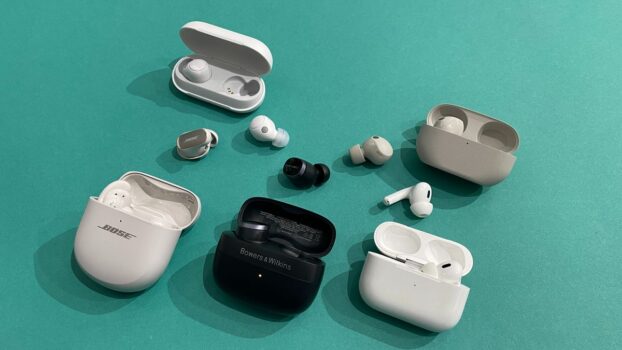
After a lot of experiments and research, I have found the top 5 wireless earbuds that are suitable for everyone.
The very first moment I placed the Sony WF-1000XM5 buds into my ears, I knew that they were something phenomenal. The fit was comfortable and snug, and to be fair, at a moment in time, I almost forgot that they were there. Traditionally, noise-cancelling technology from Sony has always been above par, but these take it beyond the limits. I usually have a job to do somewhere busy, or when traveling at the peak hours, the ANC of these earbuds would just drown the world around me. I would immerse myself solely into my music or podcast, which made it an even better experience than it usually would be.
Of course, the sound quality is good as well, with LDAC support for high-res audio, which is a boon to audiophiles. The bass is quite punchy, mids are clear, and the highs do not muddy out even when the volume is turned up really high. The most important thing that I noticed was the depth and clarity of tracks with a lot of instrumentation.
There are a few disadvantages, though. Battery life at 5.5 hours per charge was okay, but somehow, I expect that from a premium pair of earbuds; it doesn’t quite strike a chord in my heart. It packs the extra 15.5 charge hours into the case, but if you are using them for long flights or long hours of back-to-back meetings, you will find yourself grabbing that charger rather sooner than expected. And as much as they are IPX4-rated for being water and sweat-resistant, I wouldn’t want to be caught wearing them out during rainy moments for extended period of time.
In general, my top recommendation for a top-notch sound and noise cancellation is the Sony WF-1000XM5, but they ought to improve their battery life at such a price.
I was too glad to grab the AirPods Pro (2nd Generation) since I belong to an Apple stratum, and I had not been let down. Pairing them with the iPhone was as easy as I expected- that’s where Apple shows its clout. The H2 chip truly enhances the Active Noise Cancellation (ANC), and I could sense it. From muffled tracks in the subway to a crowded coffee shop, these suckers were doing a commendable job sealing out enough sound for me to enjoy what I was listening to. Transparency Mode is yet another high point for times when I need to stay aware of my surroundings, like while I walk down a bustling street.
The 6 hours of battery life are more than enough for me during my everyday commute, plus with the 30-hour battery coming from the case, running out of juice is something I never really worry about. Device switching from iPhone to MacBook is super convenient with Apple. I can just switch them by calling or simply moving from one device to another.
Now to get down to some critique. While very high quality in its own right, the sound does not match WF-1000XM5 when it comes to richness and clarity. And then we must talk about the price- a bit of an investment if you do not already possess another Apple device. An Android user will not gain that much value from these features.
In my view, they are a perfect pair of AirPods Pro (2nd Gen) for every Apple user wanting seamless integration and reliable ANC; however, they might not be the ones for audiophiles or anyone seeking the best sound quality.
I had an even lower expectation from the Ear Fun Air Pro 4 as they cost less, but surprisingly, after using them for a few weeks, I was impressed by them. The Active Noise Cancellation (ANC) is good enough considering the price tag. It doesn’t block everything as the Sony WF-1000XM5 does, but it’s definitely noticeable in places like airplanes or crowded coffee shops.
Sound quality is decently good against the cost with a bit of bass-heavy profile that I didn’t have a problem with in most genres of music. You might have to change the sound if it’s your preference to have it adjusted accordingly with the app’s customizable sound profile. Another good thing is that battery life purchase means 6 hours per charge and 30 hours with the case meaning I could easily forget about charging for several days.
Now, there are two downsides. Larger in size, the charging case is bulkier than other in-ear headphones at this price which would become a little annoying while carrying them in the pockets. On an upside, IPX7 water resistance will be great during workouts, but the sound quality is overall not up to par compared to even a few of the much pricier models. But really for this price, I cannot complain.
Ear Fun Air Pro 4 is a superbly affordable perfect fit to look for on-ear headphones with ANC and water resistance.
Sennheiser has always defined sound for me, and MOMENTUM True Wireless 4 seems to corroborate that definition. As soon as I made it connect to my work setup, I was mesmerized by how heavy the sound came at me. These earbuds are a true audiophile’s treat since they support aptX and AAC codecs everything I threw to them classical to rock music sound end was quite clear and had a richness that people might think possible. ANC experience has been generally good, though not as much as WF-1000XM5 from Sony. Even so, it denotes a quiet enough place to permit focused listening. The 30 hours of battery life (with the charging case) meant that you would not be recharging them all the time, and the intuitive touch controls let you adjust volume, skip tracks, and take calls in a jiffy.
The downside of this that this is in high price, because although the sound quality is phenomenal, it doesn’t have as much fun to listen to as some of the more bass-oriented earphones, like Sony’s WF-1000XM5. You could get very similar sound quality from cheaper models too, if you don’t mind giving up some luxuries in terms of features.
For those who demand quality sound and equal willingness to pay for it, Sennheiser MOMENTUM True Wireless 4 is nearly impossible to beat.
When I’m at the gym, I work out almost every day, and the Jabra Elite 8 Active Gen 2 caught my eye. They are sweat-resistant with an IP68 rating, and they look as if they can handle a moderate amount of rain or sweat without falling apart. I’ve brought them with me on almost all of my runs, most of which were accompanied by rain or high-intensity workouts. Despite all of the shaking motions and leaps, the headphones stayed in place.
The adaptive hybrid ANC is not just good at canceling varying degrees of background noise, but it significantly hampers the workout distractions caused by general chatter in the gym or noisy machinery. Battery life does not exceed eight hours of continuous use (32 hours with the charging case), and I would hesitate to recommend this model to any audiophiles because of its lack of aptX support.
In my experience, I would consider the Jabra Elite 7 Active as a potential replacement if I wanted durable, sweatproof, and workout-friendly earbuds, say for yoga or a good workout done outside.
Final Thoughts: Which Wireless Earbuds Should You Choose?
After months of testing, here’s what I know so far, the best of all these earbuds depends on what you want from them. The Sony WF-1000XM5 are my best because of their top-tier noise cancellation and sound quality. For Apple’s fan customers seeking Apple-like integration, there’s nothing quite like the AirPods Pro (2nd Gen). Among my budget tips: for a low price, a decent ANC experience, go for the EarFun Air Pro 4. Audiophile mice would love the Sennheiser MOMENTUM True Wireless 4, while the Jabra Elite 8 Active Gen 2 is perfect for athletes or anyone else requiring ruggedness and water-resistant durability.
The best wireless ear buds for to for you is which feature holds the most important is sound, comfort, battery life, or intended use. Each of these has something special to offer, and I am sure that my testing and researches will prove to be successful in guiding you toward choosing the pair that is perfect for you.
FAQs
Wireless earbuds are generally worth the investment if you value convenience, portability, and good sound quality. They are particularly useful for workouts, commuting, and hands-free calls. Higher-end models offer excellent sound quality, noise cancellation, and comfort.
The lifespan of wireless earbuds varies based on usage, brand, and care. On average, wireless earbuds can last anywhere from 2 to 5 years. Battery life may decrease over time due to regular charging cycles, but the earbuds themselves can last longer with proper maintenance.
Battery life varies by model, with typical wireless earbuds offering anywhere from 4 to 8 hours of playback on a single charge. Charging cases extend the total battery life to 20 to 30 hours. Some high-end models, like the Sony WF-1000XM4, can offer up to 8 hours of playback with ANC on, and up to 24 hours with the case.
Most wireless earbuds work with any device that supports Bluetooth, including smartphones, tablets, and computers. Some earbuds, like Apple’s AirPods, have enhanced features when paired with Apple devices, such as seamless integration with Siri and automatic switching between devices.
When used properly, wireless earbuds are generally safe for your ears. However, listening at high volumes for long periods can potentially damage your hearing. It’s recommended to follow the 60/60 rule: listening at no more than 60% volume for 60 minutes a day.
To clean your wireless earbuds:
Use a soft, dry cloth to wipe down the outer surfaces. For the ear tips, gently remove them (if possible) and clean them with warm water and soap. Use a dry, soft brush (like a toothbrush) to remove any dirt or debris from the mesh and charging contacts.
Avoid using harsh chemicals or water on the electronics or microphones.